
World Breastfeeding Week 2026: Complete Breastfeeding Guide by Dr. Chitra Gupta | Best Gynecologist in Lucknow
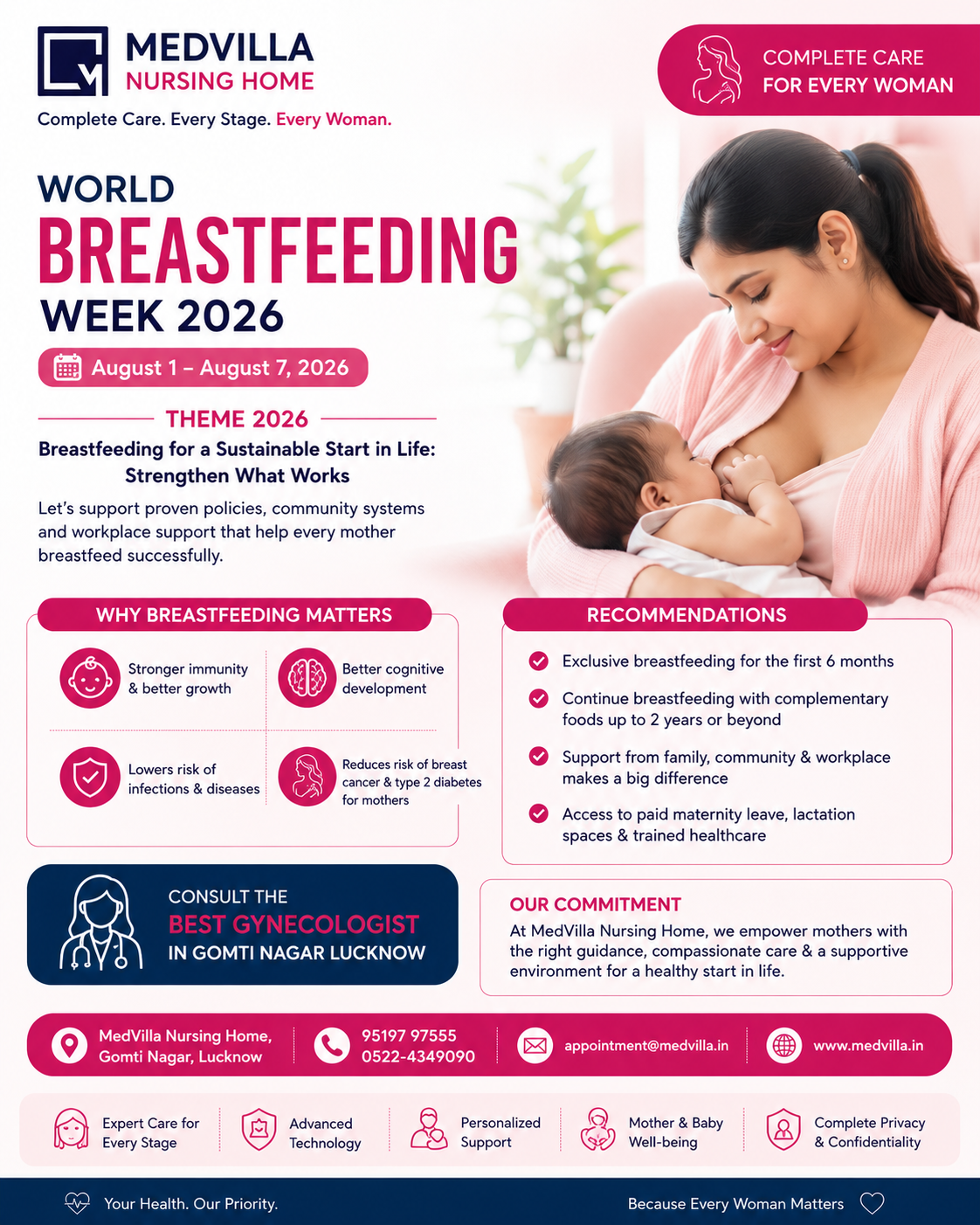
Every year, World Breastfeeding Week (WBW) is celebrated from 1st August to 7th August to encourage breastfeeding and improve the health of mothers and babies worldwide.
The 2026 theme, “Breastfeeding for a Sustainable Start in Life: Strengthen What Works,” highlights the importance of proven support systems such as skilled healthcare professionals, workplace policies, family support, and community awareness that enable mothers to breastfeed successfully.
At MedVilla Nursing Home, Dr. Chitra Gupta, recognized as one of the Best Gynecologists in Gomti Nagar Lucknow, believes every mother deserves compassionate care and evidence-based guidance throughout her breastfeeding journey.
Whether you’re expecting your first baby or have recently delivered, this comprehensive guide will help you understand why breastfeeding is considered the best gift a mother can give her child.
What is World Breastfeeding Week?
World Breastfeeding Week is a global health campaign led by the World Alliance for Breastfeeding Action (WABA) in collaboration with the World Health Organization (WHO) and UNICEF.
The campaign aims to:
- Promote exclusive breastfeeding
- Educate families about breastfeeding benefits
- Encourage governments to strengthen maternity policies
- Improve healthcare support for nursing mothers
- Raise awareness about maternal and child nutrition
Breastfeeding is not only a personal choice but also an essential public health strategy that contributes to healthier families and stronger communities.
Why Breastfeeding Matters
Breast milk is often called a baby’s first vaccine because it provides essential nutrients and antibodies that protect infants from infections and diseases.
It is perfectly designed to meet a newborn’s nutritional needs during the first six months of life.
Breastfeeding supports healthy growth, emotional bonding, and long-term development while reducing healthcare costs and environmental impact.
WHO Recommendations
According to the World Health Organization:
✔ Begin breastfeeding within one hour after birth.
✔ Exclusively breastfeed for the first six months.
✔ Continue breastfeeding alongside complementary foods until two years of age or longer.
These recommendations significantly improve survival rates and overall child health.
Benefits of Breastfeeding for Babies
1. Stronger Immune System
Breast milk contains antibodies that help babies fight infections such as:
- Ear infections
- Pneumonia
- Diarrhea
- Respiratory illnesses
2. Better Brain Development
Studies show breastfed babies often demonstrate improved cognitive development and learning abilities.
3. Perfect Nutrition
Breast milk provides the ideal balance of:
- Protein
- Healthy fats
- Vitamins
- Minerals
- Water
No artificial formula can completely replicate its composition.
4. Lower Risk of Chronic Diseases
Breastfeeding reduces the likelihood of developing:
- Childhood obesity
- Type 1 Diabetes
- Type 2 Diabetes
- Asthma
- Allergies
5. Emotional Bonding
Skin-to-skin contact during breastfeeding strengthens the emotional connection between mother and baby.
Benefits of Breastfeeding for Mothers
Breastfeeding benefits mothers just as much as babies.
Faster Recovery After Delivery
Breastfeeding stimulates uterine contractions, helping the uterus return to its normal size more quickly.
Lower Risk of Breast Cancer
Women who breastfeed have a reduced lifetime risk of breast cancer.
Reduced Risk of Ovarian Cancer
Longer breastfeeding duration is associated with a lower risk of ovarian cancer.
Better Weight Management
Breastfeeding burns additional calories, supporting postpartum weight loss.
Lower Risk of Type 2 Diabetes
Research suggests breastfeeding improves long-term metabolic health.
Improved Emotional Well-being
Breastfeeding releases oxytocin, often called the “love hormone,” which promotes relaxation and bonding.
Common Breastfeeding Challenges
Many mothers face initial difficulties, but most challenges can be managed with professional guidance.
Poor Latch
A baby who isn’t latched properly may not receive enough milk.
Low Milk Supply
Stress, dehydration, or incorrect feeding techniques may affect milk production.
Breast Engorgement
Painful swelling can occur when milk isn’t removed effectively.
Cracked Nipples
Usually caused by an improper latch.
Blocked Milk Ducts
Can lead to mastitis if untreated.
At MedVilla Nursing Home, Dr. Chitra Gupta provides personalized breastfeeding support to help mothers overcome these challenges confidently.
Common Breastfeeding Myths
Myth 1
Small breasts produce less milk.
Fact: Breast size does not determine milk production.
Myth 2
Formula milk is just as good.
Fact: Formula provides nutrition but lacks the antibodies found in breast milk.
Myth 3
You should stop breastfeeding if you’re sick.
Fact: Most common illnesses do not require stopping breastfeeding.
Myth 4
Breastfeeding always hurts.
Fact: Pain usually indicates a positioning or latch issue.
Signs Your Baby Is Getting Enough Milk
Your baby is likely feeding well if they:
✔ Gain weight steadily
✔ Produce 6–8 wet diapers daily
✔ Feed 8–12 times in 24 hours
✔ Sleep comfortably after feeding
✔ Remain active and alert
Breastfeeding Tips for New Mothers
- Begin breastfeeding within the first hour after birth.
- Feed on demand rather than on a fixed schedule.
- Maintain skin-to-skin contact.
- Drink plenty of water.
- Eat a nutritious, balanced diet.
- Get adequate rest.
- Seek professional help if difficulties arise.
When Should You Consult a Gynecologist?
Consult a specialist if you experience:
- Severe breast pain
- Fever with breast redness
- Low milk production
- Difficulty latching
- Baby not gaining weight
- Persistent nipple bleeding
- Signs of mastitis
Early consultation can prevent complications and improve the breastfeeding experience.
Why Choose Dr. Chitra Gupta?
With 25+ years of clinical experience, Dr. Chitra Gupta is among the Best Gynecologists in Lucknow, offering comprehensive care for women at every stage of life.
Expertise Includes
- Pregnancy Care
- High-Risk Pregnancy
- Normal Delivery
- Cesarean Delivery
- Breastfeeding Support
- PCOS & Hormonal Disorders
- Infertility Treatment
- Menopause Care
- Gynecological Ultrasound
- Laparoscopic Surgery
At MedVilla Nursing Home, every mother receives compassionate, evidence-based care in a safe and supportive environment.
Celebrate World Breastfeeding Week 2026
This year’s theme reminds us that successful breastfeeding depends on strong healthcare systems, informed families, and supportive workplaces.
Every mother deserves encouragement—not judgment.
Every baby deserves the healthiest start in life.
Together, we can strengthen what works and create a healthier future for generations to come.
Frequently Asked Questions (FAQs)
Is breastfeeding enough for the first six months?
Yes. Exclusive breastfeeding provides complete nutrition for healthy infants during the first six months.
Can breastfeeding continue after six months?
Yes. Continue breastfeeding with complementary foods up to two years or beyond.
How often should a newborn breastfeed?
Typically every 2–3 hours or 8–12 times a day.
Can breastfeeding prevent diseases?
Breastfeeding reduces the risk of several infections and chronic diseases in both babies and mothers.
What foods should breastfeeding mothers eat?
A balanced diet rich in fruits, vegetables, whole grains, lean protein, dairy, and adequate fluids is recommended.
About the Author
Dr. Chitra Gupta
MBBS, MS (Obstetrics & Gynaecology) | Gold Medalist
Senior Consultant Obstetrician, Gynecologist & Infertility Specialist
With over 25 years of clinical experience, Dr. Chitra Gupta is dedicated to providing compassionate, personalized care for women across every stage of life. From pregnancy and childbirth to breastfeeding support and advanced gynecological care, she helps women make informed health decisions with confidence.
Book Your Consultation
📍 MedVilla Nursing Home, Gomti Nagar, Lucknow
📞 95197 97555 | 0522-4349090
🌐 www.medvilla.in
📧 [email protected]